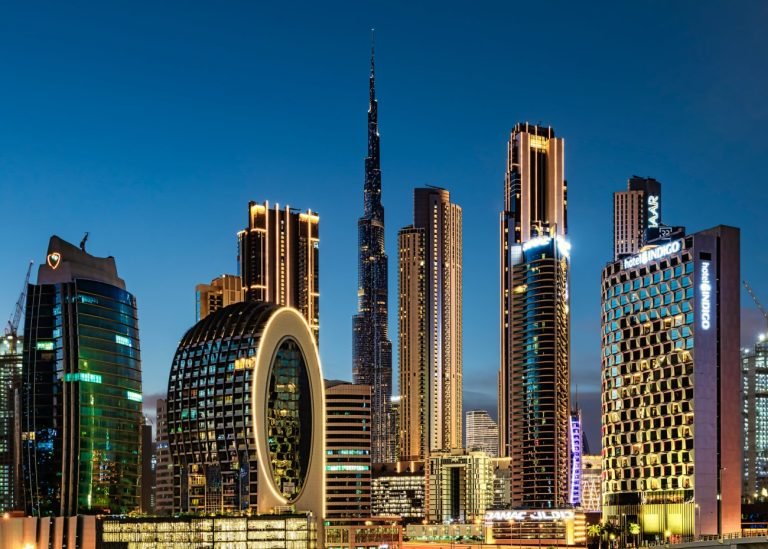
After two years of sharp rent increases, Dubai’s leasing market is settling. A large handover pipeline is arriving through 2026, and for the first time in several cycles, renewal negotiations are tilting back toward the tenant. That shift reopens a question many residents had set aside during the squeeze: if you intend to stay three years or more, does continuing to rent still make sense?

A market that is starting to favour the tenant
The rent spikes of 2024 and 2025 have lost momentum. Forecasters expect roughly 120,000 residential units to be scheduled for handover in 2026, the heaviest year of the current cycle, though delivery history suggests a third or more typically slip into later years. Even allowing for delays, the direction is clear: more stock, more choice, and more room to negotiate at renewal. Most analysts now expect price growth to moderate to the mid-single digits rather than the double-digit jumps of the past two years.
For a tenant, that is welcome relief. It is also a prompt. A softer rental market is precisely the moment to check whether your annual rent would be working harder as equity.
The cost of staying put
The arithmetic is straightforward, even if every case differs. Rent paid is rent gone; a mortgage payment, by contrast, retires debt and builds ownership. Consider a household paying AED 160K a year for a two-bedroom apartment. Over five years that is AED 800K with nothing retained. Across Dubai’s higher-yielding apartment submarkets, gross rental yields run roughly 6–9%, which is also a useful proxy for the gap between what a tenant pays and what an owner captures.
Financing has also become more workable. Fixed mortgage rates in early 2026 start from around 4%, with three-month EIBOR sitting in a calmer corridor than in 2023. The figures above are illustrative rather than a quote — the right answer depends on price, deposit, tenure, and how long you plan to hold — but the structural point holds: in a stabilising market, the case for owning strengthens for anyone with a multi-year horizon.
What the Golden Visa actually requires in 2026
Residency is the other half of the decision, and the rules are more accommodating than many buyers assume. The property route to the 10-year Golden Visa rests on a total holding of AED 2M or more, and that threshold survived the April 2026 rule review.
- Mortgaged ready property: the earlier minimum down payment was removed in 2025. A February 2026 clarification confirmed that for a ready, mortgaged home the full DLD-registered value counts toward the AED 2M test — not only the paid-up portion.
- Off-plan property: eligibility uses the amount paid. An Oqood registration showing AED 2M paid to the developer is sufficient to begin an application; a completed title deed is not required.
- Portfolios count: the AED 2M can be met across more than one property.
Rules change, and a bank’s no-objection certificate is part of any mortgaged application, so confirm the current position before committing. The point for a long-term tenant is simple: ownership and residency now arrive together rather than in sequence.
Where the buy case is strongest
Submarket choice does most of the work. For yield-led buyers, Jumeirah Village Circle remains one of the most consistent apartment markets in the emirate, with gross yields in the 7–9% range and the deepest transaction volume of any district. Business Bay draws steady professional tenant demand on the back of its proximity to Downtown and DIFC. For buyers weighting long-term capital growth over immediate income, Dubai Creek Harbour and Dubai South are infrastructure-led plays where value tracks delivery of the wider master plan.
How we would approach it
There is no universal answer. A two-year stay usually favours renting; a five-year-plus horizon, in a stabilising market with financing near 4% and residency attached, increasingly favours owning. The variables that decide it are personal — tenure, deposit, and whether the unit you would buy is the one you would actually want to live in. We advise on that comparison directly, mapping the specific submarket, payment structure, and resale liquidity to your own timeline. If you are weighing the question for 2026, speak with the Jalili advisory team and we will run the numbers against your circumstances.